
Learn what is respite care , its key benefits, and how it supports caregivers and loved ones. Know respite care options in Texas for peace of mind
Offering care for a loved one is frequently incredibly rewarding, it leads to mental, emotional, and physical challenges. Respite care is a temporary time period service which assists carers temporarily while ensuring their loved ones continue to get compassionate and attentive care.
It is difficult to undervalue the benefits of respite care for elderly. It additionally assists families to keep balance and prevent burnout whereas providing carers with an opportunity to relax, rejuvenate, and focus on their own health. Caregivers can rest easily knowing that a loved one is healthy and well taken care of at all times.
Peer Support services that assist families with managing caregiving responsibilities have grown more and more necessary throughout the United States, but particularly respite care Texas. Families are presented with more options than ever before for care for a brief period of initiatives that fit their particular needs and time constraints, benefit both carers and care receivers. This blog will try to explore what is recipe care, benefits of respite care for the elderly, medical respite care, and respite care facilities.
Understanding Respite Care
Understanding the different types of respite care can assist families choose the right option for their exceptional requirements.
Types of Respite Care
Depending on the level of care required and the care recipients’ preferences, there are various ways to provide respite care:
In-Home Respite Care
This particular kind of care enables loved ones to stay in their own homes while the primary carer receives a break through having a professional carer come to the home.
Facility-Based Respite Care
Care is provided in a dedicated facility to offer social activities, medical supervision and specialized support when required.
Adult Day Programs
Structured programs during the day that offer socialization, home delivered meals, and activities, giving caregivers time during work hours or personal commitments.
Duration Options
Respite care can be personalized to fit different circumstances and timetables:
- Short-Term – Several hours to a day are suitable for running activities or going to appointments.
- Long-Term – Prolonged support that lasts for a few weeks or a few days and commonly used during recovery times or holidays.
- Emergency Care – Sudden and unplanned assistance for unanticipated events or urgent caregiver requirements.
Who Get Advantages from Respite Care
Numerous individuals and their families receive adaptive aids by respite services, including:
- People who have developmental or physical disabilities.
- Patients with chronic diseases who want continuous care.
- Caregivers looking for relief to maintain their own physical and mental wellness.
- Seniors in need of supervision or assistance with everyday tasks.
Why Respite Care Matters
A caregiver’s emotional, physical, and mental health can be impacted as a result of their full-time commitment to offering care for a loved one. Families looking to maintain balance while delivering trusted, premium care must comprehend the need for temporary care.
Promoting the Well-Being of People Who Care
Care for a brief period supports carers to take regular rest days to rejuvenate, recharge,and focus on their own health. The medical respite care helps to ensure carers have the ability to provide care without becoming burdened by lowering stress, improving the mood, and preserving their levels of energy.
Avoiding Burnout in Caregiving
Burnout within caretakers is a frequently occurring issue that results from continuous stress and tiredness. Burnout can be prevented with respite assistance by:
- Enabling caretakers to voluntarily step away without feeling responsible.
- Delivering expert assistance to family members during their vacation.
- Providing chances for personal time and time for oneself.
Enhancing Quality of Life for Patients and Families
Care for a brief period improves the experience of care for recipients as well as providers. Among the positive aspects of respite care are:
- Thorough trusted care from qualified experts.
- Opportunities for sufferers to get involved and interact.
- A more positive family dynamic when caretakers return feeling rejuvenated and more understanding.
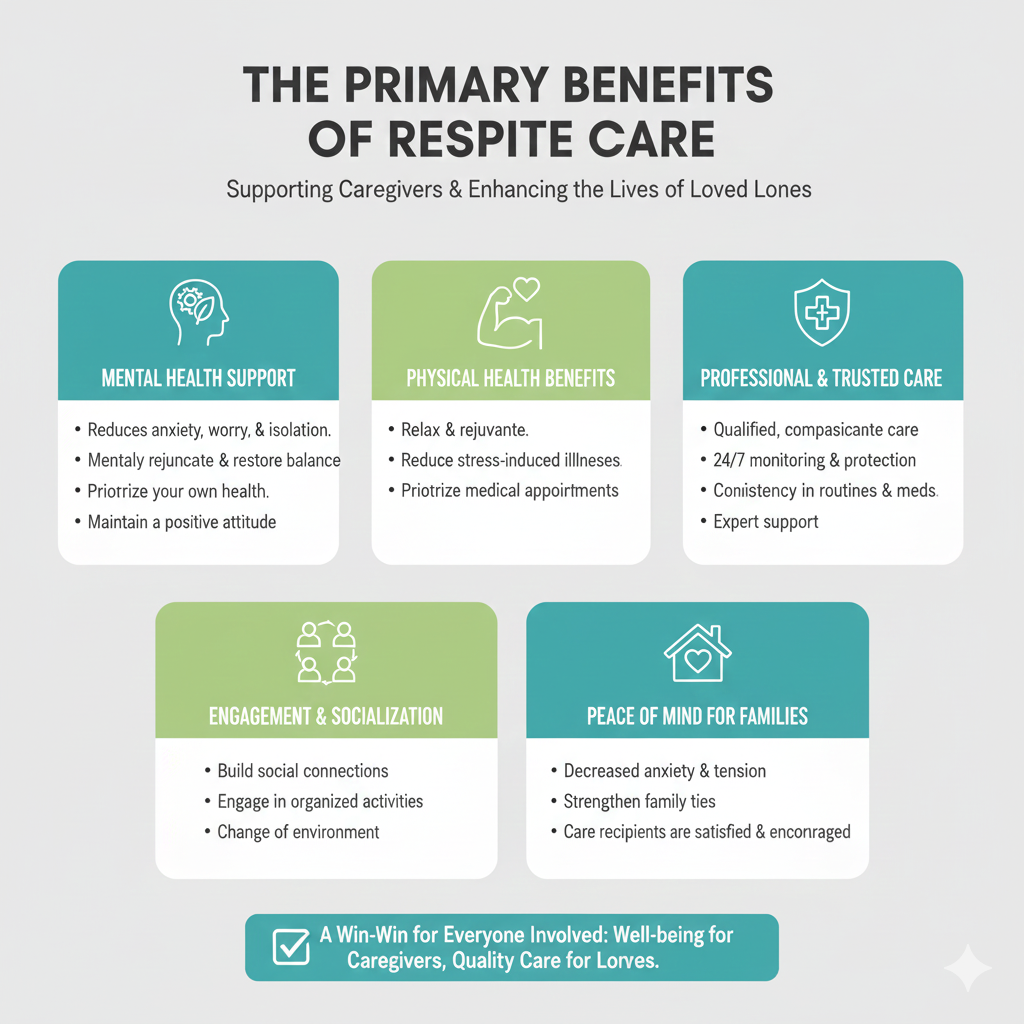
The Primary Benefits of Respite Care
Although caring for a loved one can prove highly rewarding, there can frequently be emotional and physical difficulties involved. Families are able to recognise the importance of respite care for both providers and care recipients when they are familiar with the primary benefits it offers.
Mental Health Support
Temporary assistance helps and supports caregivers feel less anxious, worried, and alone by giving a valuable mental break. Frequent respite enables carers to:
- Mentally rejuvenate and restore balance
- Take your own health first without thinking about anything else.
- Keep a pleasant attitude when taking care of the people you love.
Physical Health Benefits for Caregivers
Restlessness, muscle strains, and other medical conditions can occur from delivering continuous supervision. Emergency assistance enables carers to:
- Relax and rejuvenate from the everyday duties of offering care.
- Reduce or decrease the chance of illnesses prompted by stress.
- Make their own medical appointments and time for themselves a priority.
Professional and Trusted Care for Patients
Family and friends continue to get qualified, compassionate care whereas carers take their vacation. This ensures that:
- Monitoring and protection at all times.
- consistency in daily activities and prescription medications.
- Caring expert support from experienced professionals.
Engagement and Socialization Opportunities
Care for a brief period initiatives regularly involves activities that promote interaction and engagement to help care recipients:
- Build social connections and networks.
- Participate or engage in organized activities for mental stimulation.
- Enjoy daily routine and a change of environment.
Peace of Mind for Families
Carers need to be relaxed and focus on themselves and must understand that their loved one is in capable hands. Families can benefit of respite care in the following ways:
- Decreasing anxiety and tension.
- Strengthening ties within family members.
- Making sure those receiving care are satisfied and encouraged.
How to Access Respite Care
Existing standards of life for both the carer and the person receiving care can be significantly improved by choosing the accurate respite care.Learning how to make use of these resources ensures that families receive the support they need in an effective and secure manner.
Assessing Care Recipient’s Needs
Identifying the person you love’s particular requirements is the first step towards getting Emergency assistance. Requirements such as:
- Level of supervision or monitoring required.
- Physical or medical respite care and assistance needed.
- Preferred environment such as home-based, respite care facilities or day program.
- Social and emotional support needs.
Exploring Available Services
Families may look into various emergency assistance possibilities after their requirements have been determined.
- Home care providers which offer experienced carers in the ease of your own home.
- programs in the community which give volunteer assistance and local resources for emergency relief.
- Adult day centres provide organised programs which involve food, activities, and daily supervision.
Evaluating Credentials and Staff Expertise
Making sure carers are qualified and trained is crucial. Families ought to verify:
- Agencies’ or staff member certifications and licenses.
- Familiarity giving care for individuals who have ongoing medical conditions, the elderly, or those with disabilities.
- Feedback or reviews from various families.
Understanding Costs and Insurance Coverage
Care for respite can vary in cost depending on services and duration. Families should:
- Confirm hourly or daily rates.
- Enquire about insurance coverage or Medicaid assistance.
- Look into community grants or local aid programs that could lower expenses.
Strategies for an Easy Respite Care Experience
Effective use of care for respite can result in considerable effects both on carers and care receivers. By thoroughly preparing and engaging, families can ensure that their stay is quick, beneficial, and relaxing.
Plan Ahead for Appointments or Stays
Both carers and those receiving care are helped by planning ahead for care for respite Consider the following about:
- Selecting times and dates that suit your needs.
- Informing care recipients of the short-term adjustment to ease their worry.
- Keeping personal items, care instructions, or prescription drugs ready.
Effectively Communicate with Staff and Carers
A pleasant experience and continuity of treatment are assured by clear communication:
- Share detailed instructions about daily routines and medical needs.
- Discuss any special preferences, habits, or triggers of your loved one.
- Maintain open feedback with care for respite staff to address concerns.
Maintain Comfort and Routines for Loved Ones
Consistency makes care recipients feel secure throughout care for a moment:
- Develop constant medication, eating, and activity schedules.
- Provide comfortable things like blankets, favourite books, or private possessions.
- Ensure that those getting care are aware of who will be assisting them.
Make Regular Use of Respite Care as a Support System
When integrated into continuous support, care for respite functions best:
- Plan regular breaks in order to prevent caregivers feeling fatigued.
- When necessary, move between facility care, day programs, and personal care at home.
- Consider care for respite as a valuable resource for your future health.
How Diadem Hearts Supports Respite Care
We at Diadem Hearts understand the challenges that are faced by caretakers and the importance of taking time for yourself. Our respite care services have the goal to give families trustworthy and compassionate assistance whereas ensuring that loved ones receive professional, focused care. Diadem Hearts assists caretakers in recharging, reducing stress levels, and maintaining their mental health with home support, organised day programs, or temporary respite care facilities. Families can feel easy knowing their loved ones are secure, engaged, and given encouragement at every opportunity when they choose Diadem Hearts.
FAQs
Q1. What is respite care?
Caretakers can require immediate or temporary assistance in order to guarantee that loved ones receive expert care while they relax.
Q2. Who can benefit from respite care?
Patients with ongoing medical conditions, benefits of respite care for the elderly, along with those with disabilities have something to gain.
Q3.What types of respite care are provided?
Opportunities involve programs offered in the community, personal care at home, and adult day centres.
Q4. How long can respite care last?
It can involve emergency care for unanticipated requirements, for several days or weeks, or short-term hours or a day.
5. How do I access respite care in Texas?
Families can explore community programs, home care agencies, or adult day centers while considering credentials and costs.