Discover Peer Support in Mental Health at Diadem Hearts through one-on-one guidance, group programs, and shared healing with trained supporters
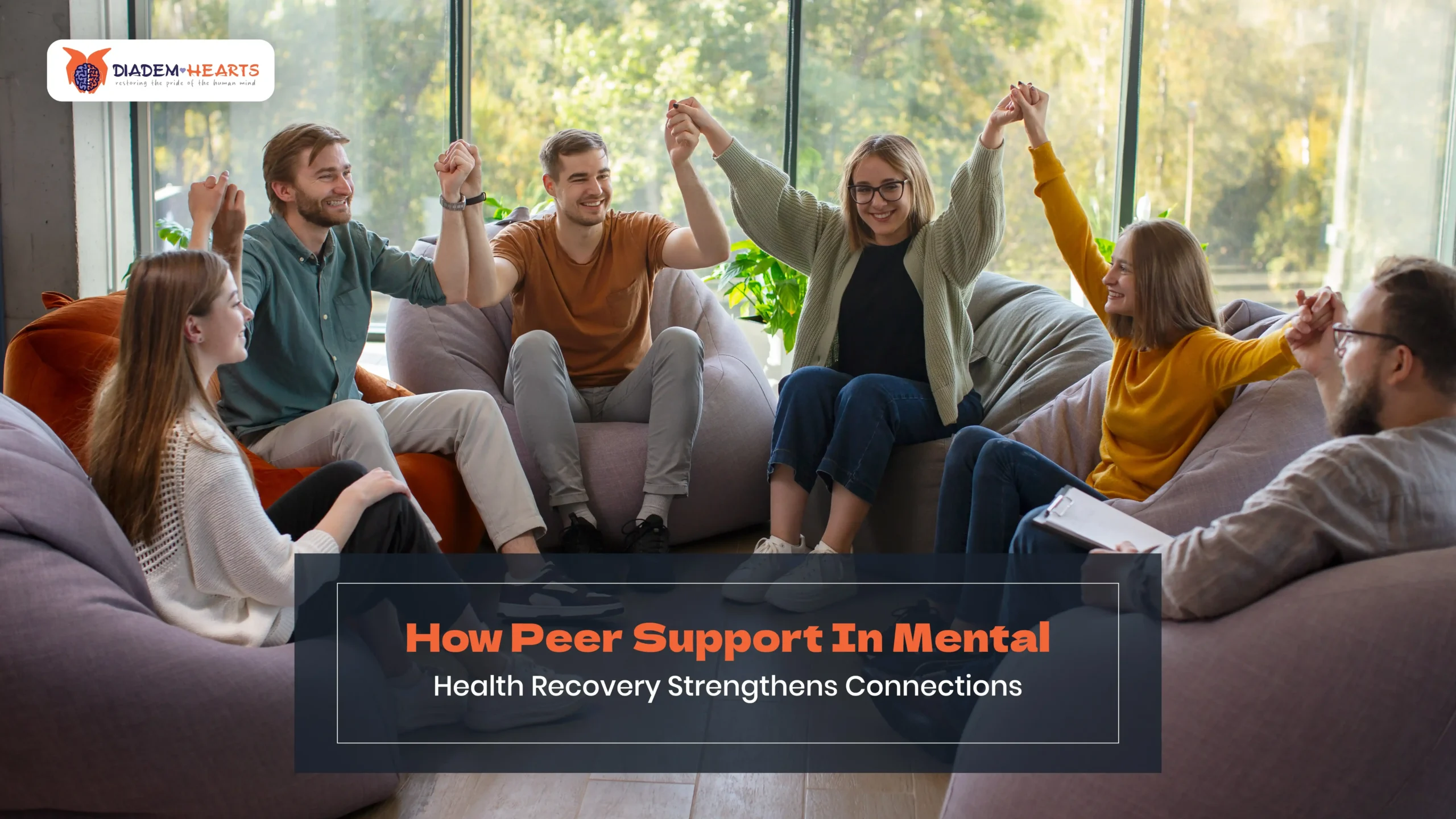
Healing is an intensive process that is not meant to be completed alone in the context of mental health recovery. Peer support in mental health recovery believes that genuine improvement usually begins when people are valued, recognized, and inspired by other people who have gone through similar difficulties. Individuals see hope, strength, and comfort in shared experiences through peer support in mental health.
Emotional healing relies deeply on interactions with other people that encourage safe settings for open dialogue, compassion, and trust. These interactions are whether encounters with trained peer supporters or through one-on-one peer support. People can get help in ways that are personal, respectful and motivating through different types of peer support.
Shared healing fosters resilience and belonging from peer support groups to group-based peer support. Together, engaging, acquiring knowledge, and growing fosters confidence, lessens feelings of isolation, and acts as an indication that healing is stronger and more possible once it takes place in a group setting. This blog will try to explore how peer support in mental health recovery strengthens connections and how they benefit the people.
What Is Peer Support in Mental Health?
Peer support in mental health unites people via mutual experiences which offer support and understanding from those who have experienced the same things. It is established on mutual respect, shared experiences, and an understanding that hope and connection improve recovery.
- Compared to a medical diagnosis or course of treatment, peer support depends on a shared personal experience.
- Trained people who use their own healing experiences to help others are referred to as peer supporters.
- Support promotes empowerment, helpful techniques for coping, and emotional assistance.
- Peer support is unbiased, compared to traditional treatment.
- Mutual understanding, equality, and trust are the fundamental components of relationships among peers.
- Professional mental health care cannot be substituted by peer assistance; rather, it enhances treatment.
Types of Peer Support
Peer support in mental health is of many forms that meet various recovery requirements. It delivers transition assistance such as guidance, support, and understanding through connections with those who share similar practices.
One-on-One Peer Support
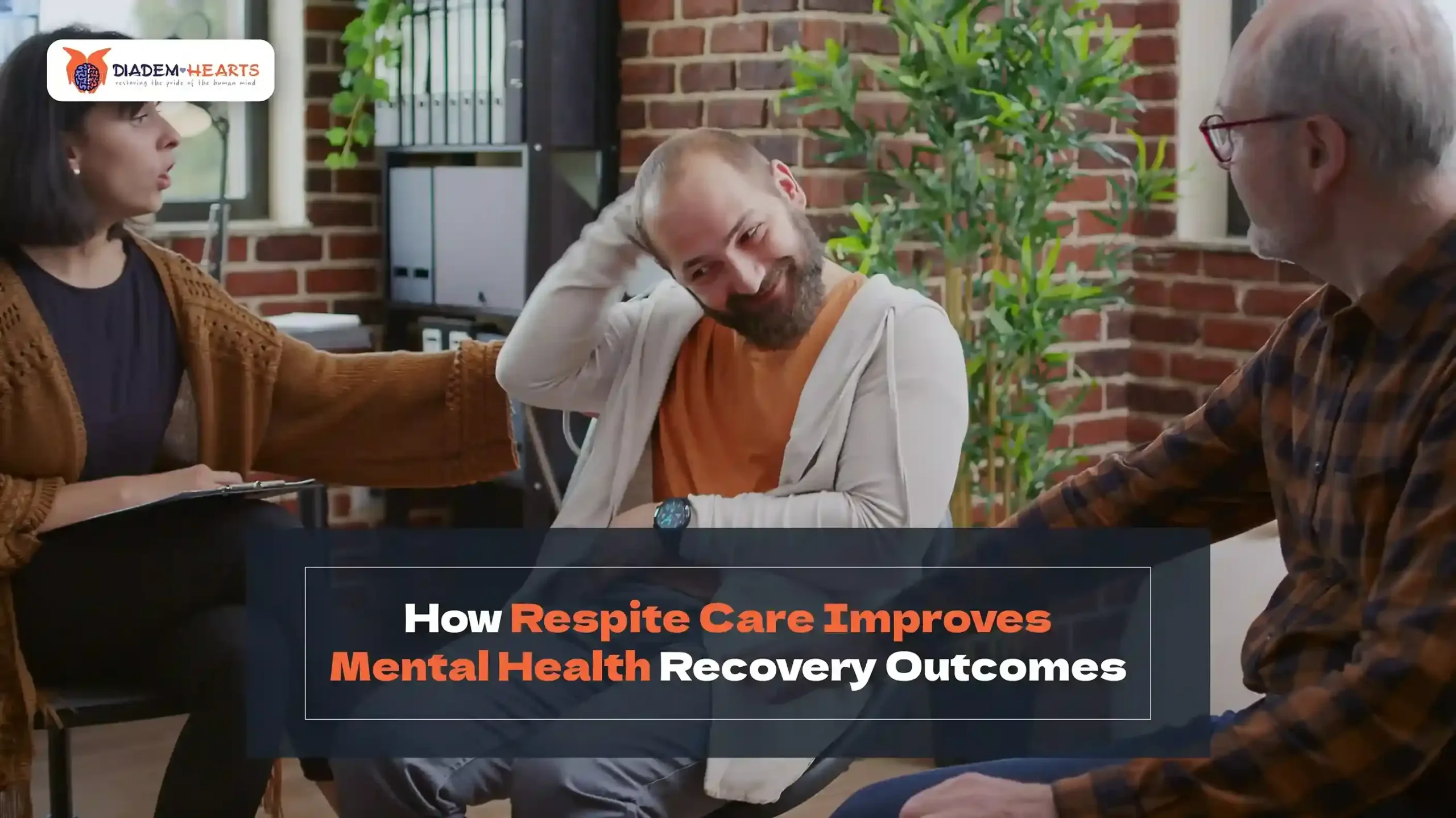
Expert peer supporters give one-on-one or person to person support, mentoring, and supportive listening personalized to each person’s particular recovery experience.
Peer Support Groups
People can deal with coping mechanisms and experiences in large or small groups to build a sense of community and understanding.
Group-Based Peer Support
Organized programs that merge social interaction and collaborative learning to offer a secure and encouraging setting.
Community-Based Peer Programs
Initiatives promote peer support in community centers, workplaces, or educational institutions in order to foster sustainable and easily accessible interactions, grassroots.
Online Peer Support
People from various places come together through online platforms and forums. These sources provide flexible access to support, guidance, and mutually beneficial experiences.
The Role of Shared Lived Experience
Successful peer support services are built on shared lived experiences, fostering trust, empathy, and understanding. These connections reduce isolation and dishonor whether one-on-one peer support or group-based peer support such as peer support groups.
- Shared experiences help build deeper trust between individuals in peer support in mental health.
- Peer supporters provide their guidance and assistance based on their own experiences.
- One-on-one peer support that enables focused and individualized assistance.
- Peer support groups foster community and belonging.
- Contributors feel validated, understood, and less isolated.
- Reduces disgrace and promotes hope through connection and mutual support.
Building Community Through Peer Support
Peer support promotes deep connections by bringing people together in secure, friendly environments where shared experiences produce understanding and trust. Participants build abilities, establish enduring relationships, and feel a strong sense of community which encourages sustained mental health recovery.
- Encourages respect for one another and diversity in peer support groups.
- Offer chances for interaction with others in an environment free from harsh remarks or criticism.
- Assists to ensure the sustainability of relationships outside of therapeutic or medical settings.
- Develops or builds networks of everlasting support, empathy, and trust.
- Promotes resilience via common interactions in the community.
- Fosters a feeling of community and group healing.
Peer Support in Different Mental Health Settings
Peer support is flexible, inclusive, and accessible in a range of settings. People can connect in ways that match their requirements and way of life. They meet either through online communities, in-person groups or grassroots efforts.
- Peer assistance is readily available in person and online.
- Assistance from peers in groups improves mutual learning and growth in groups.
- Offers flexible access to support based on individual preferences.
- Reduces isolation by connecting people across different locations.
- Extends support beyond traditional clinical environments.
- Strengthens recovery through diverse and adaptable peer support options.
Benefits or Who Most Benefits from Peer Support?
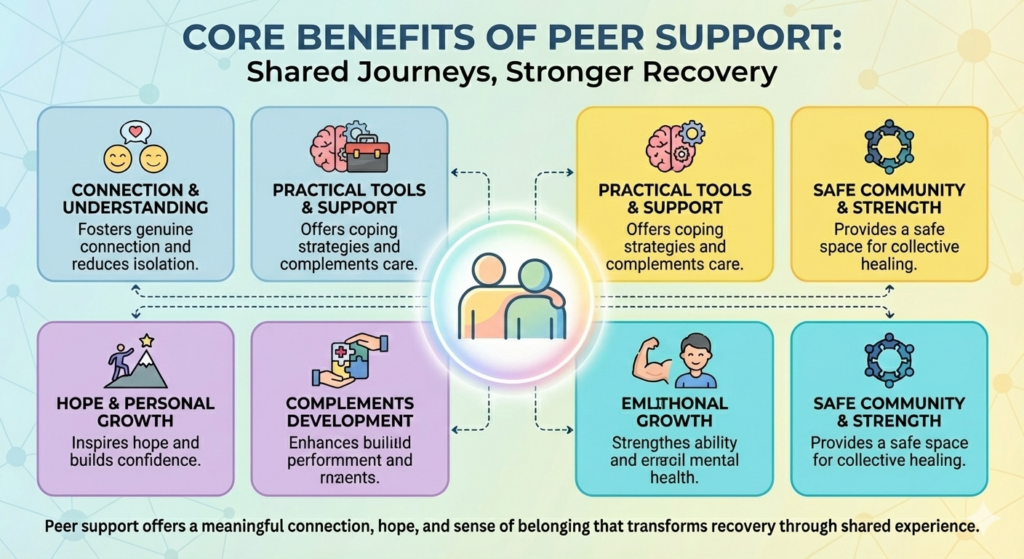
At different stages of the mental health journey of people, peer support provides meaningful connection and understanding. People get hope, confidence, and a sense of belonging that strengthens recovery by learning from shared experiences.
- Delivers genuine or real support from those who fully understand mental health issues.
- Help to reduce feelings of loneliness, isolation, and emotions of being misjudged.
- Recommend helpful and useful coping mechanisms based on your own experience.
- Promotes secure, welcoming environments for sharing difficulties and celebrating successes.
- Supports individuals who are new to recovery with hope and motivation.
- Complements professional care with empathy and peer connection.
- Builds confidence in managing daily challenges and personal growth.
- Strengthens that healing and recovery are stronger when experienced together.
How Peer Support Complements Professional Treatment
Together with medical treatment, peer support improves the healing process through offering insight, inspiration, and useful suggestions.
- Strengthen coping strategies learned through treatment and counseling.
- Encourages or motivates consistency and following with treatment plans.
- Presents emotional support in between medication or treatment appointments.
- Decreases feelings of loneliness or isolation during healing.
- Promotes self-advocacy, confidence in oneself, and self-determination.
- Provide helpful guidance based on personal experience.
- Supports motivation and lasting engagement in care.
- Strengthens outcomes through an inclusive and collaborative approach.
How Diadem Hearts is Supporting You Every Step of the Way
Peer support is a group that depends on compassion, comprehension, and similar experiences rather than simply a program. We put people in touch with trained peer supporters who assist, empower, and encourage them as they manage their mental health journey. Diadem Hearts supports participants feeling valued, heard, and supported and reminding everyone that recovery is stronger when experienced together.
FAQs
What is peer support?
Peer assistance is guidance and support from a person who knows someone who struggles with mental health difficulties.
Who can become a peer supporter?
Peer supporters involve individuals with personal recovery experience who have gone through support training.
How does peer support differ from therapy?
Peer support is based on expertise and not medical in nature; it complements medical treatment but fails to fill its place.
What types of peer support are available?
One-on-one, collaborative, grassroots initiatives, and virtual or online support are several potential forms of assistance.
Who benefits most from peer support?
Anyone in recovery, struggling with mental health problems or who needs support along with professional care.