Learn evidence-based Treatments for Substance Use Disorder, including planning, therapy types, and recovery approaches that support long-term healing
Substance use disorder (SUD) is a multifaceted disorder, which is defined by the compulsive use of substances like alcohol, opioids, or stimulants, regardless of their detrimental health, relationship, and life impacts. It can influence millions of individuals around the globe and may be either mild or severe with occasional misuse to chronic addiction. The medical and psychological perspective of SUD can be used to decrease stigma and emphasize the significance of quality intervention.
The discussion of the treatment options is vital due to the lack of the universal solution. The therapy, medicine, support groups, and individual care plans can be used as treatments caring about the substance use and underlying mental health conditions. Being informed about the possible methods helps to empower individuals themselves and their families and increase the likelihood of successful recovery in the long run. In this blog, an attempt will be made to discuss the treatment of substance use disorder, methods, planning and type of planning.
Treatments for Substance Use Disorder
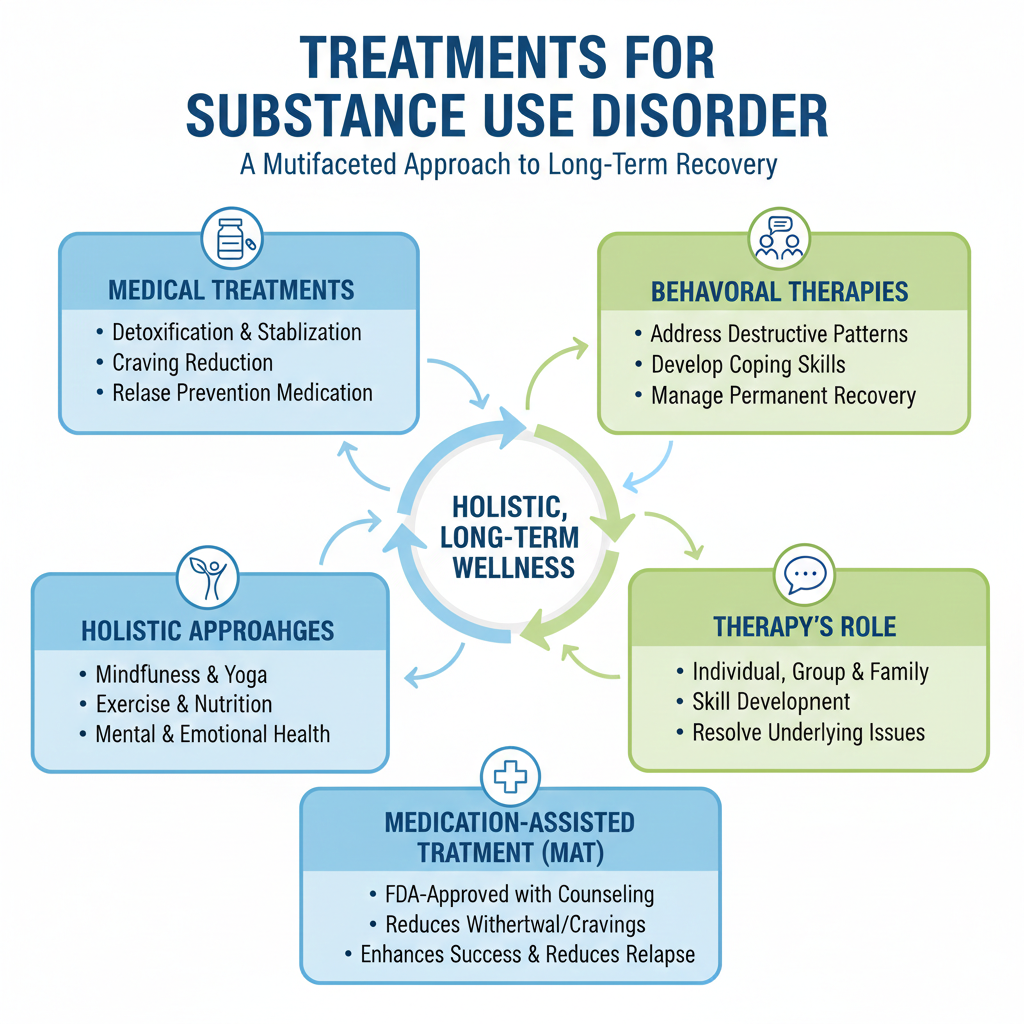
After studying the effective substance use disorder treatments, look into the medical, behavioral, and holistic approach, and therapy and medication-assisted treatment in supporting long-term recovery.
Medical Treatments
Medical care assists in controlling the withdrawal, stabilization of the organism, and eliminating the possibility of relapse with the help of controlled detoxification and individual medication-based therapy.
Behavioral Therapies
Behavioral therapies of treatments for Substance Use Disorder focus on destructive substance use patterns, including assisting individuals to explore coping, learn to manage triggers, and acquire skills to maintain permanent recovery.
Holistic Approaches
The holistic approaches, including mindfulness, yoga, exercise, and nutrition programs, complement conventional treatments of SUD and promote mental, emotional, and physical health.
Therapy’s Role
Therapy offers direction, emotional, and skill development through one-on-one, group or family to resolve underlying problems which lead to substance use.
Medication-Assisted treatment (MAT)
MAT is an integrated approach of FDA-approved medications and counseling; thus, minimizing the withdrawal symptoms and cravings and enhancing the success of recovery and decreasing the risk of relapse.
Substance Use Disorder Treatment Services
Learning about substance use disorder treatment services will allow an individual to access inpatient, outpatient, community, and specialized treatment programs to aid recovery and general well-being.
Inpatient Rehabilitation Programs
Inpatient rehabilitation services in Texas offer 24/7 support in a structured setting, which includes detox, therapy, and medical oversight to patients with severe substance use disorders who require intensive care.
Outpatient Treatment Programs
The outpatient programs enable the patient to come to the therapy sessions at home, which is flexible and does not affect professional care and recovery.
Detoxification Services
Detox substance use disorder treatment services are done in a safe manner and withdrawal symptoms are under medical supervision which prepares individuals to therapy and minimizes physical and psychological complications during initial recovery.
Community Support Groups
Support groups, including the use of 12-step programs or peer-minded meetings, provide support, support, and experience, which promote sustained recovery and emotional stability. Community support is one of the best substance use disorder treatment services. It is most important to know how these community mental health services support recovery and inclusion for substance use disorder.
Specialized Care Centers
There are also specialized centers that specialize on either co-occurring disorder, addicts in adolescence, or gendered populations, and they offer specialized programs that meet the unique needs of children facing unique challenges in the course of substance use disorder treatment.
Counseling and Therapy Services
Professional counseling is used to deal with mental health residential treatment, behavioral patterns, and triggers that are emotional and enable individuals to develop coping mechanisms and maintain recovery among other treatment services.
Treatment Planning for Substance Use Disorders
The first step in making an effective treatment plan or search for substance use disorder treatment services and case of substance use disorders is the determination of individual needs and severity. The substance use pattern, mental health and social circumstances of each individual are assessed to identify the best interventions. Effective evaluation is a way of making sure that the treatment is geared towards the individual challenges and recovery aims of the patient.
Developing individual care plans is vital towards positive results. The plans can encompass treatment, medication-based therapy, support groups, and lifestyle plans. Closer monitoring of progress is made, and strategies are made to change as required to enable long-term recovery due to substance use disorders.
Bipolar Disorder and Substance Use
Learn about the connection between substance use and bipolar disorder as well as dual diagnosis, difficulties in treatment, and combined methods of positive recovery.
Dual Diagnosis
Bipolar disorder is frequently associated with substance use disorder forming a dual diagnosis. The conditions affect one another, which is why they should be identified as early as possible to be treated and recover in the long term.
Treatment Challenges
It is not an easy task to treat bipolar disorder and drug use at the same time. The risks of mood fluctuation, drug interactions, and relapses should be closely observed and coordinated in order to be safe and stable.
Integrated Care
Integrated treatment involves mental and substance misuse disorder therapy. Using coordinated care plans, both conditions are treated at the same time to enhance the outcomes, decrease the relapse, and help to improve the overall health.
Types of Substance Use Disorders
Recognizing substance use disorder types assists in identifying those affected, their distinct substance difficulties, consumption patterns, their risk factors, and prevalence that are used to determine appropriate treatment and recovery interventions.
Alcohol Use Disorder
Alcohol use disorder is a condition where one takes alcohol in excess or cannot stop drinking even where it is not healthy or social. The degree of severity is mild to severe, and may occasionally need therapy, support groups, or medical care in order to avert a relapse.
Opioid Use Disorder
The use disorder of opioids covers the prescription pain killers or heroin abuse. It has a great danger of addiction, physical dependence and overdose and it requires the use of medication, counseling, and observation to efficiently cure it.
Stimulant Use Disorder
There is the use disorder of stimulants such as cocaine or methamphetamine. It influences the nervous system, making the person get a boost of energy or alertness, but causing addiction, mental health problems, and physical problems in the long term.
Cannabis Use Disorder
Cannabis use disorder is a condition that makes a person addicted to the use of marijuana leading to social, occupational, or mental disruptions. These can be behavioral therapy, counseling, and individually customized support programs.
Hypnotic, Anxiolytic, or Sedative Use Disorder
It is a disorder that is characterized by the misuse of drugs like benzodiazepines. Addiction will form very fast and it needs to be carefully monitored by the medical team, treatment, and tapering will have to be done slowly to prevent the worst of the withdrawal symptoms.
Other Substance Use Disorders
There are other substances such as hallucinogens, inhalants or polysubstance abuse. These rarer forms are also extremely dangerous to health, requiring tailor-specific treatment and expert guidance towards successful recovery.
Health Issues Related to Substance Use Disorder
Use of substances may cause severe physical and psychological health problems. Substance use has an impact on the heart, liver, and lungs and predisposes depression, anxiety and other psychiatric disorders.
The long-term use also affects the cognition, memory, and decision-making. It is essential to intervene early treatments for substance use disorder because prompt intervention reduces the damage to organs, complications, and also the recovery is as well as the general quality of life is greatly improved.
Your Recovery Journey with Diadem Hearts
Treatment of substance use disorder is based on effective medical and behavioral treatment, holistic treatment, individualized treatment plans, and continued support. Diadem Hearts offers a wide range of services, such as therapy, counseling, and recovery programs, which will help a person find the way to permanent sobriety and overcome the co-occurring mental health issues. With expert support and at-hand tools, Diadem Hearts would enable individuals to make the initial step towards recovery and long-term existence.
FAQs
What does substance use disorder (SUD) mean?
SUD is a health disorder in which people are compelled to use substances against their interests without thinking of the negative physical, psychological, or social effects.
What are the interventions to substance use disorder?
They involve medical therapy, behavioral therapy, holistic therapy, counseling and medical treatment with use of drugs based on individual needs.
What are the differences between inpatient and outpatient programs?
With inpatient programs, patients receive 24/7 treatment in a facility whereas with outpatient programs, patients can receive treatment at home.
Is substance use treatment affected by bipolar disorder?
Yes, the co-occurring bipolar disorder needs combined care to work on the mental and substance use issues.
What is the significance of early intervention to SUD?
Amazing cures and remedies stemming from early interventions lower the risk of physical and mental health harm, increase recovery success, and prevent substance use-related long-term complications.